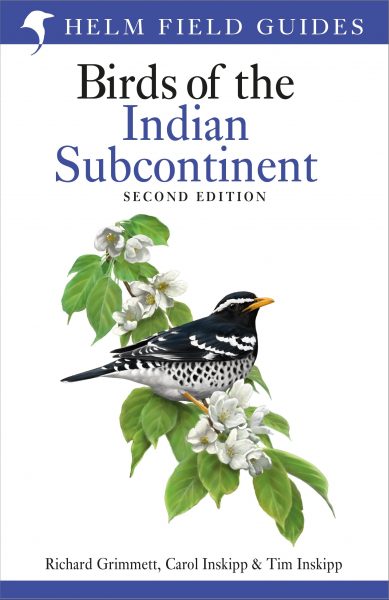
An interview with Richard Grimmett, lead author of ‘’Birds of the Indian Subcontinent: Second Edition’, published by Bloomsbury in the Helm Field Guides series.

Richard Grimmett is a keen birder who has visited southern Asia many times. He has co-authored numerous identification guides to the Indian Subcontinent and its constituent regions, mainly in collaboration with Carol and Tim Inskipp. Richard has worked for BirdLife International for more than 40 years and was in charge of the Asia Programme, based in Indonesia and then Japan, between 1997 and 2007. Until recently he was BirdLife’s Director of Conservation and is currently a Senior Conservation Advisor. He lives in Cambridgeshire, UK, and his birding these days is mainly on his local patch, RSPB Ouse Fen.
Gehan de Silva Wijeyeratne interviews Richard Grimmett.
The ‘Birds of the Indian Subcontinent’ in the Helm Identification Guides series when it first came out in 1998 was truly a new benchmark. I still have the first edition signed by you, Carol and Tim Inksipp and some of the artists. Can you describe how such an ambitious book come about?
This was a mammoth undertaking, and I did not fully appreciate how much work would be involved, especially given I was working full-time with a demanding job at the International Council for Bird Preservation (now BirdLife International). I can’t imagine what I was thinking, but I was looking for a new challenge and had approached Nigel Redman at Pica Press with the idea of a guide to the birds of China (having recently returned from a birding trip to western China and Sichuan). Nigel thankfully (and assuredly) suggested that I would be much better placed to prepare a guide to the Indian Subcontinent having undertaken three lengthy trips to the region (1978-1984). We had talked about this for years, but the word on the street was that Ben King was well-advanced with an Indian guide, and it just did not make sense to try and follow suit. Nigel didn’t think Ben’s guide would be forthcoming, and he suggested that I joined forces with Carol and Tim Inskipp. It was agreed between Carol, Tim and I, that Tim would be responsible for the taxonomy, nomenclature and maps, Carol for the sections on habits, habitat, voice, distribution and status, and I would lead on the identification section and the plates (including selection and liaison with the artists). We got started in 1992, with Robert Kirk subsequently taking over at A&C Black as our managing editor. It took a while for the enormity of the task to sink in. With more than 1400 species to cover, we realised that this meant we needed to complete roughly one species account each day for the following 4 years, and most evenings and weekends therefore had to be devoted to completing the task, at great sacrifice for my wife Helen and our young family. Leave was frequently given over to visits to the British Museum at Tring, and every time I opened a draw of specimens, to see how much variation there was in plumages and races, the task became even more daunting. It was a joy to work with the artists, some of whom are very close friends. We delivered the manuscript and completed plates in autumn 1997.
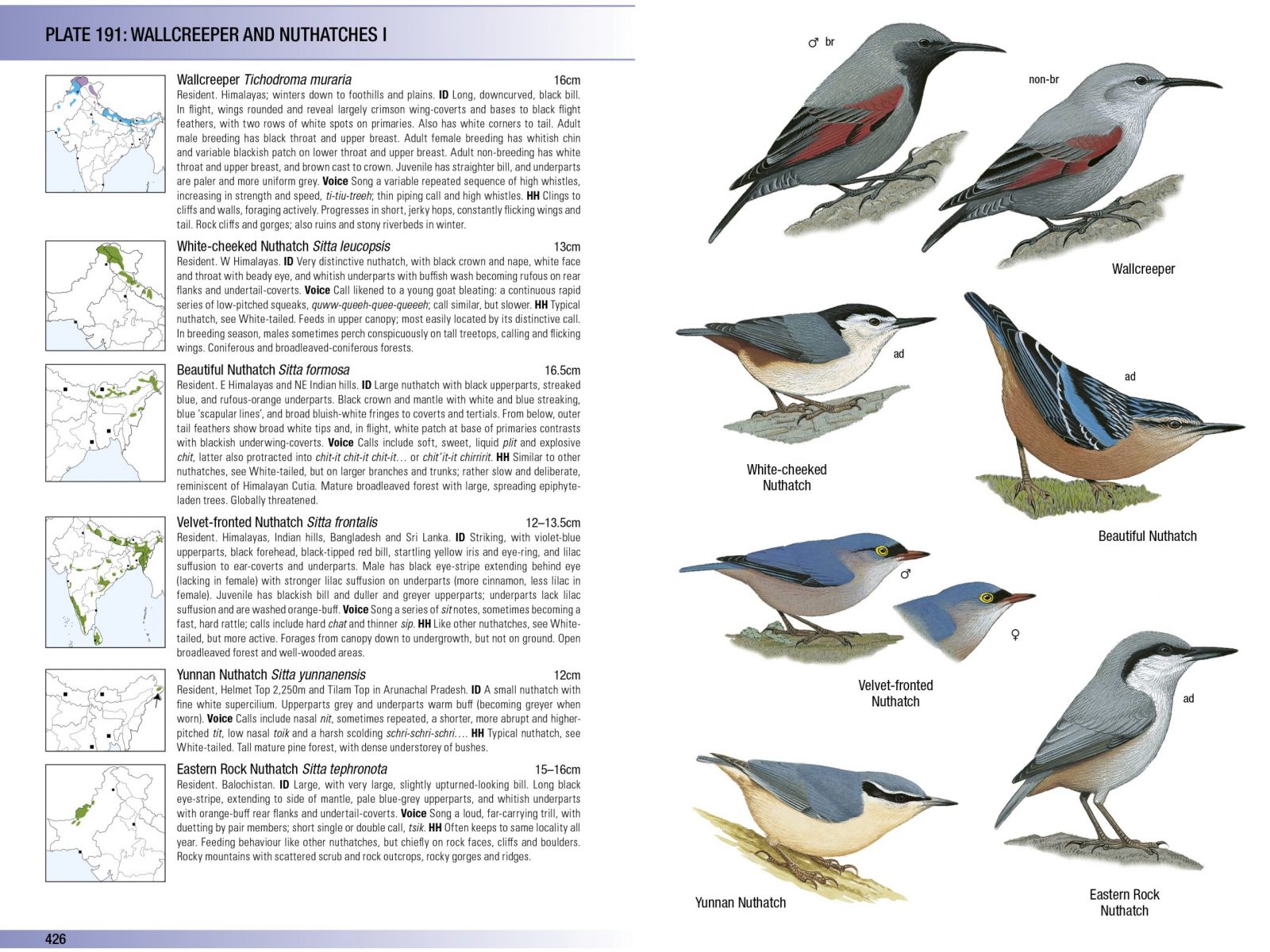
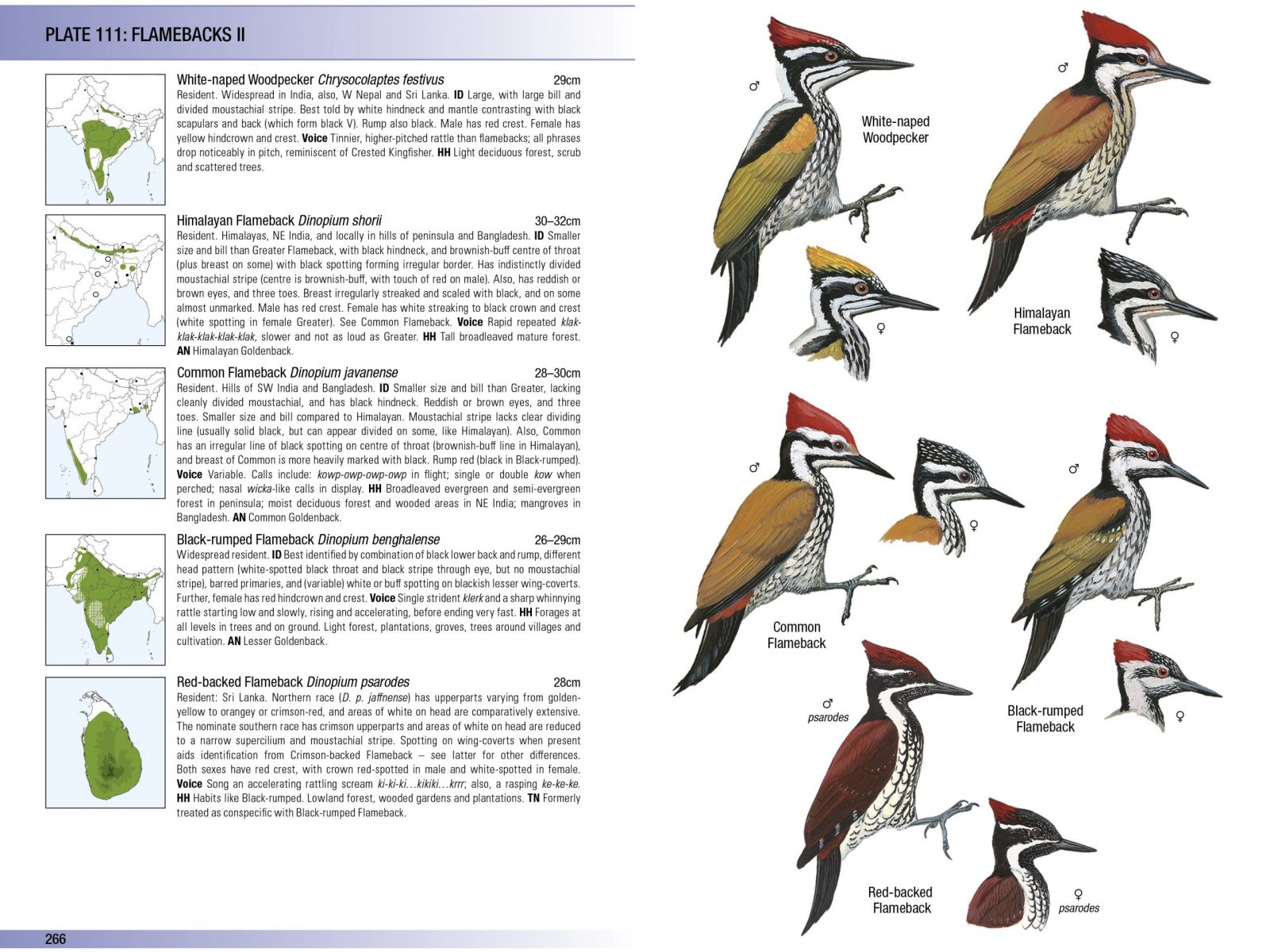
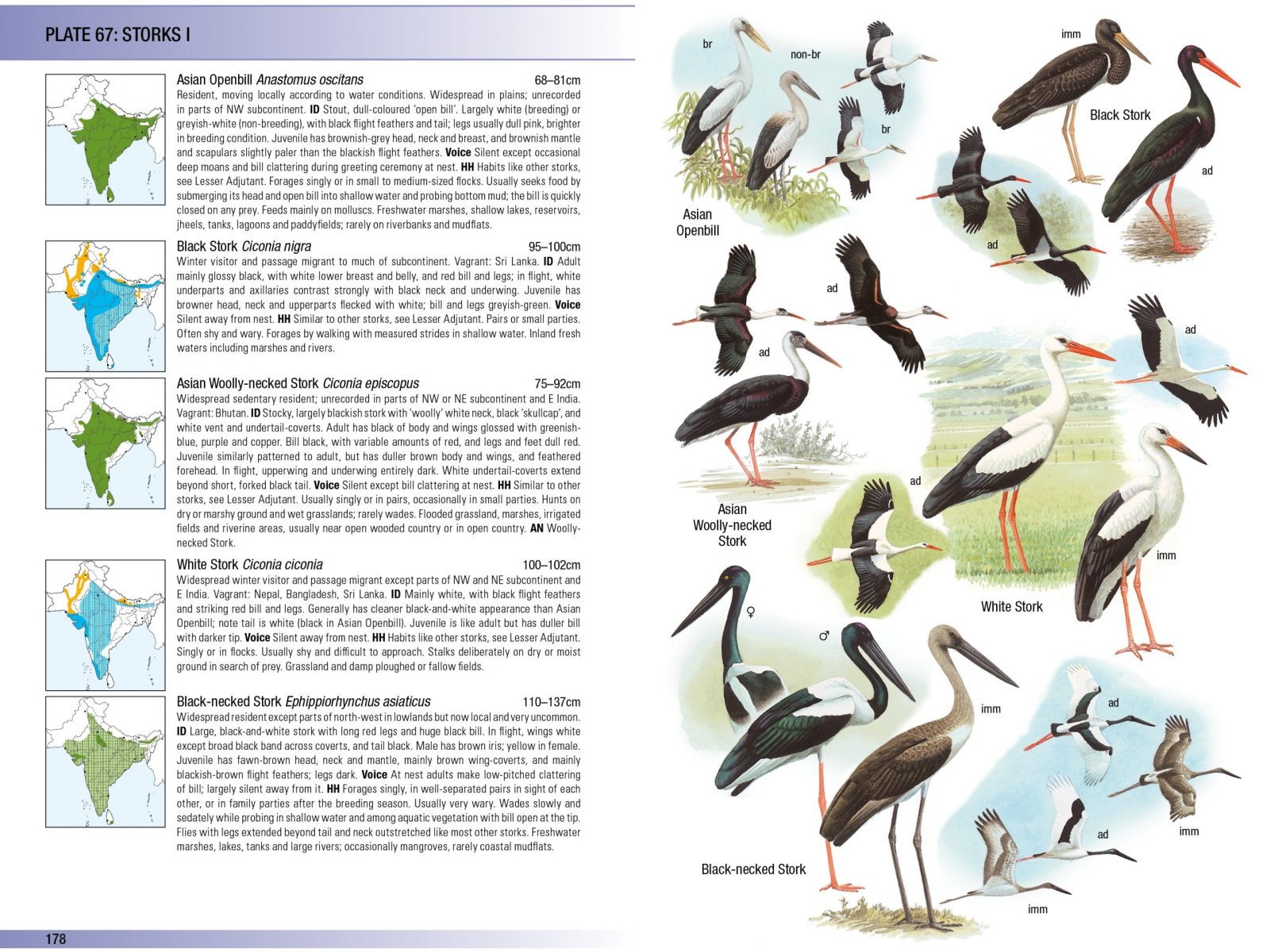
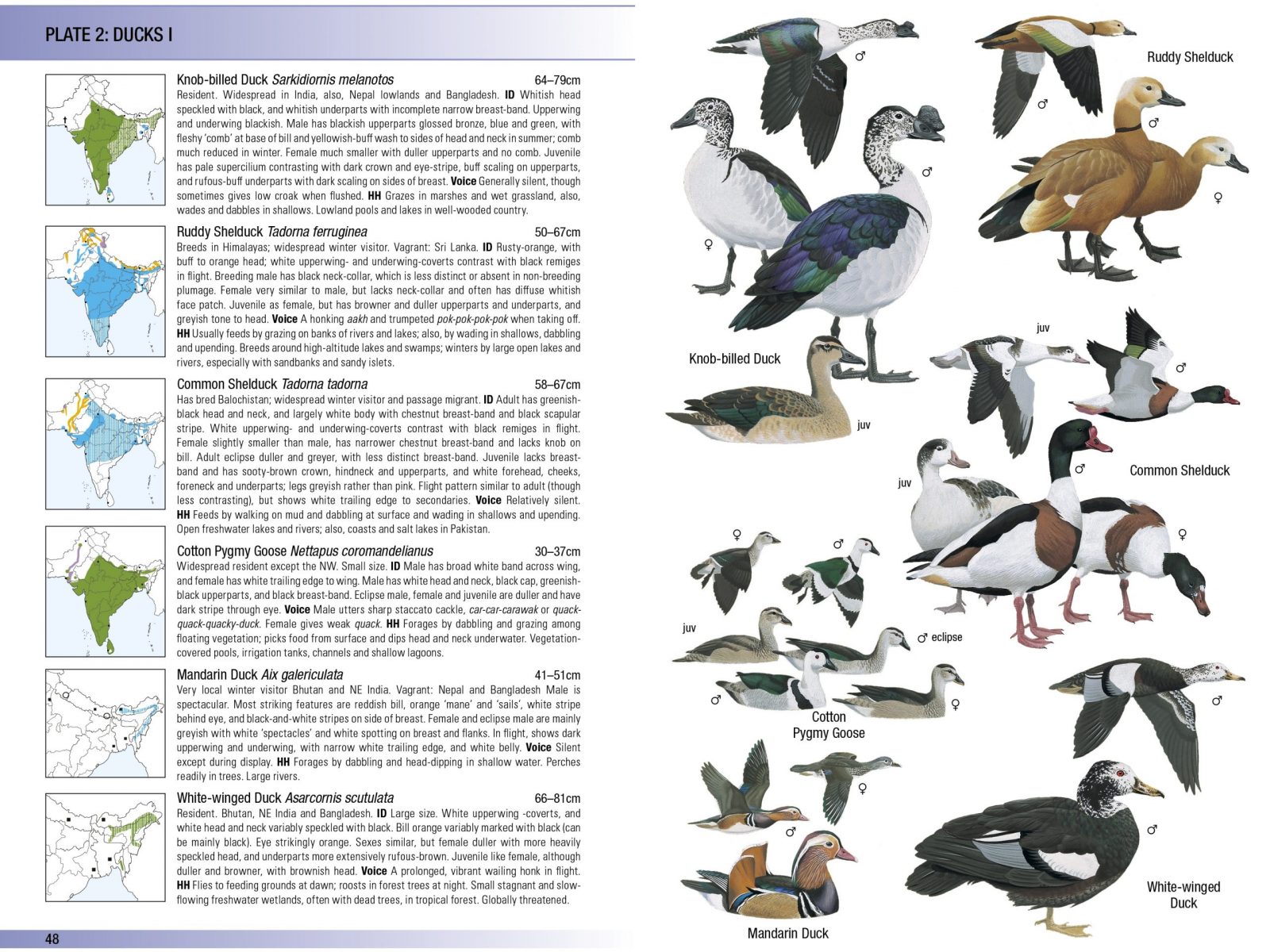
The first edition was a door stopper of a book with 153 plates by 12 artists followed by 888 pages of text and maps. The spin off pocket guide version with plates, facing text, interspersed with maps, came out very quickly a year later in 1999. This was followed by the ‘Birds of the Indian Subcontinent Second Edition’ in 2011, in a modern field guide format with the plates, distributions maps and text on facing pages. At 528 pages and perhaps a third or fourth of the weight of the very first edition, it was portable. Although heavier than the pocket guide version, with the more substantial text and the inclusion of the distribution maps it rapidly became the preferred book amongst many birders. But it took 13 years from the first edition. Was this because the publisher was cautious with introducing another format or was it that the authors were simply too busy?
Time flies! We have always had the enthusiastic support of our publisher (now Bloomsbury in the Helm Field Guide series) with Jim Martin as our commissioning editor and Amy Hodkin overseeing the production.
Recognising that a guide covering the whole of the subcontinent is challenging to use in the field, in terms of number of species and plumages, we embarked up a series of sub-regional guides, with separate volumes covering North and South India, Nepal, Bhutan, Pakistan, and Sri Lanka. From 2011 to 2021 we worked on a second edition of the Birds of Nepal, an expanded edition of the Birds of Bhutan (including the Eastern Himalayas) and a guide to the Birds of Bangladesh. Only when these were behind us, could we focus on the 2nd edition of the Birds of the Indian Subcontinent. Once again, full time work and other commitments meant this was a labour of love and it has taken over 4 years to undertake the revision.
Looking back, how do you sum up the success of the book?
This is very difficult to determine. Following completion of the original work in 1997, I was based in Indonesia and then Japan for BirdLife International for 10 years and did not pay too much attention to reviews nor receive much feedback from fellow birders. As noted above, we devoted much effort to ensuring the book was available in the region, and I heard from family and friends that they had come across our work in book shops in India and Nepal, as well as local guides using them in the field. Whilst I don’t have an accurate tally, around 170,000 copies have been distributed and sold.
When I first visited India in 1978, we only met one other birder in the nine months we were in the field, plus Bob Fleming in Kathmandu. When we started the guide, birding in India and birdwatching holidays to the region were beginning to take off. The increase in the popularity of birding and birdwatching tourism since then has been phenomenal, and there can be little doubt that the availability of good field guides has helped to serve and stimulate this.
Thanks to apps like eBird, there is now a huge amount of data available for updating distribution maps. Were you’ll able to use software to help with the maps?
When we started the work, there was no internet and therefore no on-line repository of photographs (such as now available via the Macaulay Library at the Cornell Lab of Ornithology), sound recordings (such as now held by the Xeno-canto Foundation), and distributional information (such as now accessible via eBird and Cornell’s Birds of the World). Now, the information available changes by the hour, and it is impossible to keep up. No sooner than you feel you need to draw a line, to get the work finished and to the publisher, does some new and important material become available (or is missed!).
The maps have been a particular challenge for the second edition. We only have a large postage stamp-sized slot for each map, it is a huge region, and there is so much data now available. It is important to recognise that whilst eBird is an incredible resource, it does not map historical information, and large parts of the region have not been recently visited, so it is important to take account of earlier works such as Tom Roberts’ seminal ‘Birds of Pakistan’. We were fortunate to be able to work with Praveen J who was able to model e-Bird data for some species, but otherwise they were prepared by hand and drawing on a mix of previous and new distributional information, with Julie Dando skilfully preparing them as graphics and laying out the book.
How do you’ll keep pace with the increasing number of taxonomic papers which keeps avian taxonomy in a state of flux?
This has also been a challenge. The shifting sands and occasional seismic shifts in taxonomy and nomenclature have been a nightmare, and we have done our best to follow the leading thinking. Some wren-babblers are now cupwings, and some prinias are now babblers! There have been times when I have felt like apologising to readers as names have changed (and gone backwards and forwards) overtime. The second edition was in its final stages of completion, with plates and text laid out, and editing completed, when the new Avilist, and its ambitious attempt to standardize names, became publicly available. So, we could not follow this, but the number of differences are hopefully manageably small. Going forward, one has to hope that the list will stabilise and the second editions for Southern India and Sri Lanka which are underway will follow Avilist.
From the original book, how many different regional or country versions were produced and what was the process for allocating the workload amongst the authors?
As mentioned above, it has always been our intention to ensure our work is as widely accessible as possible. National and regional editions have been published covering Bhutan (1999), Nepal (2000), Northern India (2003), Southern India (2005), Pakistan (2008), Sri Lanka (2012), Bhutan and the Eastern Himalayas (2019) and Bangladesh ((2021).
With support from the World Bank, and others, we have been able to produce local language versions, with a Nepali language edition of the Nepal guide, Hindi, Urdu and Gujarati editions of the Birds of Northern India, and Marathi, Malayayam, Tamil and Telugu version of the Birds of Southern India. In producing these editions, I feel hugely fortunate to have worked with some great co-authors and collaborators including Tom Roberts (Pakistan), Hem Saga Baral (Nepal), Sherub (Bhutan), Asad Rahmani (Indian editions), Paul Thompson (Bangladesh) and Deepal Warakagoda (Sri Lanka) to name just a few.