
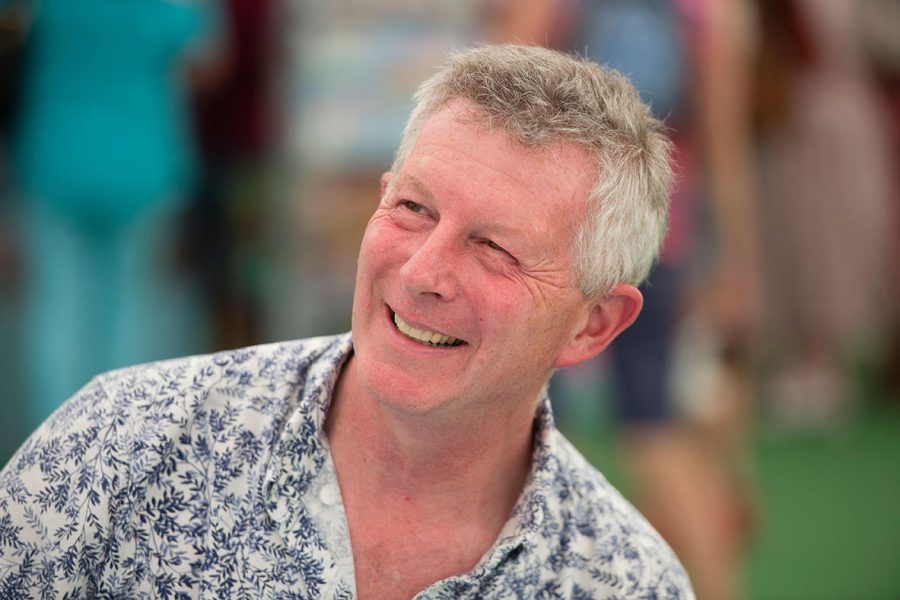
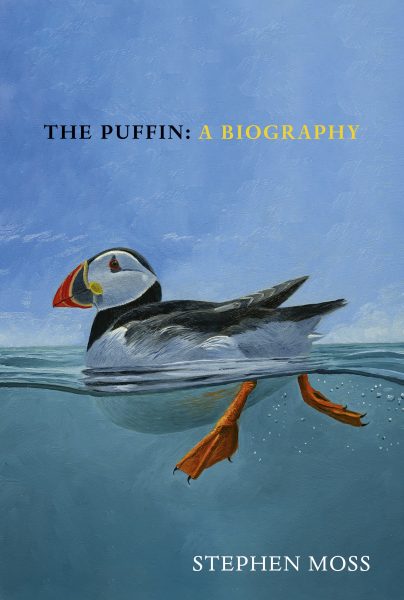
An interview with Stephen Moss, on The Puffin, published by Chatto & Windus, an imprint of Penguin Random House.
Stephen Moss is one of Britain’s leading nature writers and broadcasters. Now based in Somerset, he was born in London, and read English Literature at Gonville and Caius College, Cambridge before joining the BBC. His TV credits include the BAFTA award-winning Springwatch, The Nature of Britain and Birds Britannia, while his books include a bestselling series of ‘bird biographies’, Mrs Moreau’s Warbler: How Birds got their Names, and Ten Birds that Changed the World, which has been published in nine countries, and was shortlisted for the prestigious Wainwright Prize for Nature Writing.
He writes a monthly ‘Birdwatch’ column for the Guardian, and is a former President of the Somerset Wildlife Trust. After eight years leading the MA Nature & Travel Writing at Bath Spa University as a Senior Lecturer, he is now a Visiting Research Fellow there, and also a Special Visiting Professor at the University of Nottingham. He currently works as the Global Consultant for Netvue Technologies Ltd, a company making bird feeder cameras and other related products.
Gehan de Silva Wijeyeratne (BOC Trustee) interviews Paul Sterry.
How did this book come about?
The Puffin is the seventh in a long running series of bestselling ‘bird biographies’, following the Robin, Wren, Swallow, Swan, Owl, and Starling – which together have sold well over 130,000 copies! It was the obvious choice as the first seabird in the series. The puffin’s bright orange bill and striking black-and-white plumage have made it one of our most iconic seabirds. It has charmed nature lovers and inspired countless fables and stories, as well as becoming an emblem for children’s literature. The book follows the lifecycle of the puffin throughout a calendar year: from egg and nestling to juvenile puffling, to the adult bird’s courtship, breeding and feeding habits, and reveals its place in popular and literary culture.
How many years was this book in the making?
It took about a year to plan, research and write – with the help of an excellent researcher, Jenny Thompson. I also got a huge amount of help from seabird experts Sarah Wanless and Peter Harrison, who kindly agreed to read over my drafts to check their accuracy!
What do you want to achieve with this book?
I always want to reveal the true life – or lives – of each bird. By far the most important thing is that every species I choose must have both fascinating (and sometimes unique) behaviour and also a major human connection through history, folklore and culture. All of the seven species so far have both aspects of these; but for instance other very popular and well-loved birds, such as the Blue Tit and Blackbird, simply do not. Also each time I write a new one, I want to be surprised, and to find something different from the species that I wrote about before. Although the Robin and the Wren are both common, resident garden birds, it turns out that their behaviour and culture are very different from one another. For the third volume I really wanted to write about a migrant, and the Swallow was the obvious choice, as they are such a global traveller. Then I wanted to do a waterbird, and the Swan was also the clear frontrunner; followed by a group of birds – a choice between Owls and Crows, and the Owls won! The Starling is such a quirky bird, with its unique murmurations and our love-hate relationship with the species; while the Puffin was the clear frontrunner as a seabird, and also because people absolutely love them.
Is there a fun fact or something amazing you learnt during the writing of the book?So many! But I suppose the best was the revelation of the origin of and confusion surrounding the Puffin’s name – originally given to the Manx Shearwater, which also nests in burrows, hence that species’ scientific name, Puffinus puffnus!
Were there any memorable moments during the course of writing this book?
Not so much in the course of writing the book, but lots during my many lifelong encounters with Puffins! I start in July 1999, when my wife Suzanne saw her first puffin on the Farne Islands, and also talk about the very first time I saw one, in July 1975, on Skomer. These memories are very special to me.
For anyone who wishes to pursue this topic more, are there any online resources you would recommend?
The BTO Birdfacts web pages are excellent – and also books, including Mike Harris and Sarah Wanless’s superb monograph, published by Poyser.

